At Texada, we’re always looking for ways to smooth out the daily bumps dealerships face. Sooner or later, every dealership runs into the same problem: messy CRM data.
This often happens because of quick actions and corner-cutting during a busy day, combined with a lack of guardrails to keep things on track.
The most effective way to maintain a clean database isn’t to fix errors after they happen; it’s to prevent them from being saved in the first place.
Stopping “Garbage In, Garbage Out”
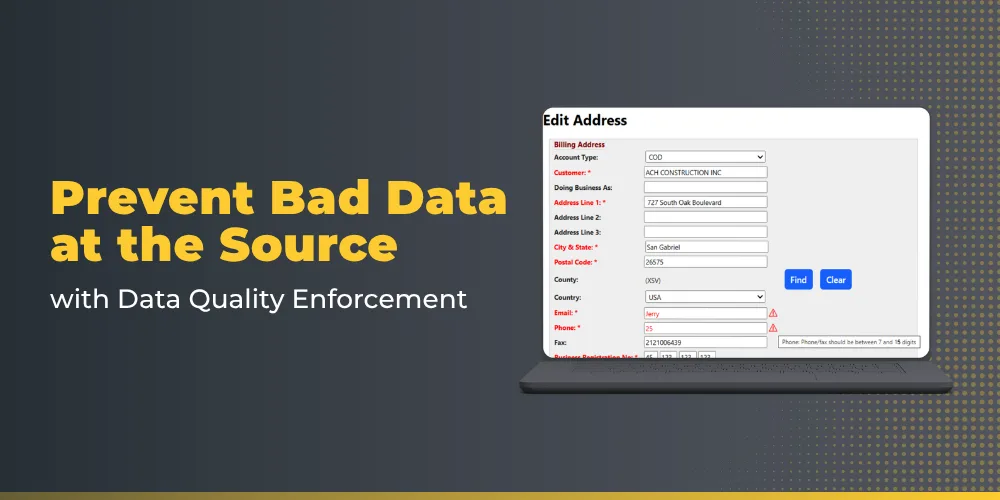
Our new Data Quality Enforcement feature acts as a real-time guardrail for your team. By validating company and contact records at the point of entry, the system ensures that information meets basic accuracy standards. It’s a simple solution to an old problem: if you don’t enter junk at the start, you won’t get junk results at the end.
Why Data Hygiene Matters for Your Growth
- Trust Your Pipeline: When you can’t trust your data, you can’t trust your reports. Enforcing quality at the start gives leadership a clearer picture of the pipeline and territory plans.
- Focus on Selling, Not Scrubbing: Manual data scrubbing is a massive drain on productivity. We want your sales team focused on closing deals, not acting as data entry clerks who have to fix bad records months later.
- Built for Your Daily Workflow: This feature is designed to support day-to-day manual entry. To keep your business moving fast, we’ve ensured that bulk data uploads are not impacted, allowing your operations and IT teams to perform mass updates without interruption.
Turning Data into a Competitive Advantage
This isn’t about putting up roadblocks and hurdles for your sales team. It’s about ensuring your dealership has the reliable foundation it needs to grow.
When your data is accurate, your sales team is more efficient, your marketing is more effective, and your growth is more predictable.
What’s Next?
This feature is already live in Equipment CRM for you to turn on! This allows you to review the new standards and enable them when your team is ready to level up their data quality.
Click here to view the documentation and see how to enable enforcement.